
Backhanded Compliments: Djokovic’s taste of the real world was unquestionably deserved
This column originally appeared on thepostathens.com.
When Novak Djokovic makes headlines, it’s never good. Even when he wins another tournament, tucks another record into his pocket and shows the world he might be the greatest tennis player to ever live, it’s met with a sigh — because it’s impossible to truly love the guy after everything he’s done off the court.
Djokovic has openly been an anti-vaxxer way before COVID-19 ever existed, and that’s his choice. He’s exposing an unbelievable number of people every day with nearly every disease under the sun, but that’s unfortunately his choice. If you don’t want to get vaccinated, though, be prepared to face the consequences.
The No. 1 men’s tennis player in the world getting his visa canceled shouldn’t send anyone into a frenzy. His parents shouldn’t run to the streets and compel the rest of the world to stand behind their son (side note: you can tell just how lovely of people his parents are by their comments on unproblematic king Roger Federer). His visa was canceled because his agent messed up, and his medical exemption was questioned because it didn’t add up until he divulged the truth later. Anyone else in his shoes would’ve had to go through the same ordeal.
Djokovic’s visa was reinstated after virtual court because of his deep pockets and his known-all-too-well name. The Australian government showed their fairness when they pulled Djokovic aside at the airport and investigated his papers but revealed their cowardice when they gave his visa back to him. A second visa block by Immigration Minister Alex Hawke isn’t the country trying to target Djokovic. It should be a warning to him, his team, his parents and all his fans that this isn’t a game. It never was. The only game he should be playing is with a yellow ball.
If you don’t hate him for the events of the past couple weeks, hate him for the newspaper staff he exposed, for the children he conversed with all while knowing this disease that has killed thousands and thousands is raging inside him, all of which he fully admitted. The only thing Djokovic will never acknowledge is his self-serving attitude, though that’s about as evident as the cockiness lighting up his eyes.
The news of Djokovic being officially deported from Australia, which means he potentially won’t be able to return to Australia and his best major tournament for three years, is jarring. To see someone who has always had his way finally be put in his place almost feels like a breath of fresh air, like there still is some hope left in the world. This could just be a fluke since nothing seems to go right anymore, but we can keep our fingers crossed.
If you feel bad for poor ol’ Djokovic, you’re part of the problem. This is far from the worst thing that’s ever happened in athletics, let alone the sport (remember Monica Seles, who was stabbed during a match in 1993 and her entire career was derailed following the incident?) Just because he’s great at the sport doesn’t mean he should be exempt from all repercussions. You can be a world-class player without being a self-serving clown. Let him savor this taste of the real world, and let him reflect on his actions from afar as he watches his Australian Open winning streak get snapped.
2020 ASB Classic: Serena Williams proves her reign isn’t over with 73rd title
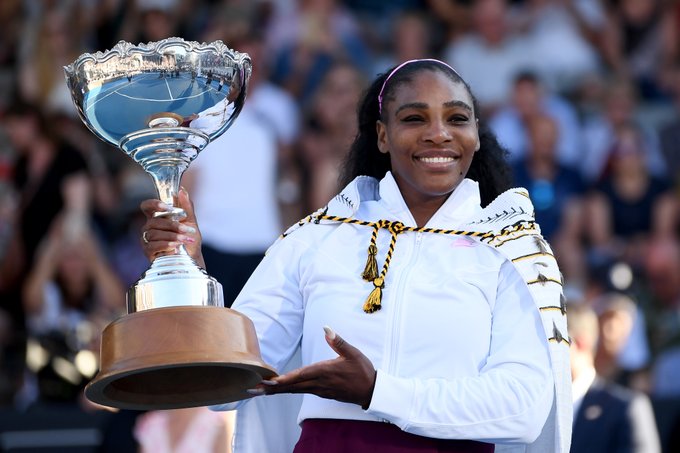
At the 2017 Australian Open, Serena Williams’ continued dominance was not faltering. She beat her sister, Venus Williams, in the singles final to claim her 23rd major title. She would find out shortly after that she was two months pregnant as she lifted the trophy.
Then her life spiraled. She stared at death in the eye, and it would be a long journey back. But how could you ever doubt the greatest ever’s ability to make a complete comeback?
After she had her daughter, Olympia, on Sept. 1, 2017, Serena was on bed rest due to complications from childbirth. Fortunately, Olympia was fine, but Serena suffered multiple blood clots on her lungs and, eventually, a hematoma. She returned to tennis five months later, but it would be the beginning of a drought — one her doubters thought marked the end, but one her avid followers knew she would overcome, no matter all the obstacles she would face.
She made her first final since returning shortly after at the 2018 Wimbledon Championships. She lost in straight sets to Angelique Kerber, and she would lose the next three Grand Slam finals she made, too. One of them, the 2018 US Open, which became infamous for Serena’s controversial issues with the chair umpire, was thought to be the end for Serena. She went to therapy to recover and exchanged letters with the winner of that match, Naomi Osaka, and there are (nor were there any in the first place) no hard feelings between the two.
After all that, everyone was on her side again. All she needed was a win.
Serena entered the 2020 ASB Classic in Auckland with no expectations. She started out strong as she had the last four tournaments at which she made the finals. She showed flashes of vintage Serena in her dominant semifinal, dropping just two games against compatriot Amanda Anisimova.
She had to face another compatriot, Jessica Pegula, in the final. Fans and commentators alike were pondering the fact that this time might be different since this isn’t a major. But everyone was afraid to say it.
Pegula broke Serena’s serve immediately to jump to a 2-0 start. In her return, Serena has been known for her slow starts, eventually fighting back but still falling short. Everyone was hoping history wouldn’t repeat itself for a fifth time, but it was starting to look that way.
Then the momentum came in Serena’s direction. She took it and never looked back.
She dropped only one more game in the first set before clinching it 6-3.
After breaking Pegula’s serve at love in the third game of the second set, Serena completely took over. It took seven more games to take the second set 6-4 and the entire championship, but it didn’t matter. She would’ve played another set to relive the exhilaration she felt when that last point ended.
“I’ve been waiting … I’ve been waiting two years for this moment,” she said during her trophy presentation. Yet, with the queen retaining her reign still, nothing’s really changed.
US Open: Despite fourth straight finals loss, Serena Williams proved she isn’t going anywhere
This review originally appeared on thepostathens.com.
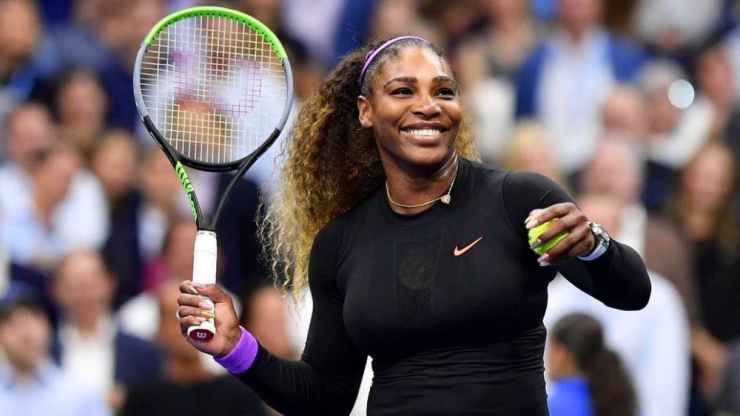
Twenty years ago, an emphatic 17-year-old Serena Williams was left speechless after securing her first Grand Slam title at the U.S. Open over then-world No. 1 Martina Hingis. Twenty years later, she was fighting for her 24th major title at the same place it all began.
This time, she had to face 19-year-old Bianca Andreescu, a Canadian superstar who’s had an inconceivable year of success — earning a perfect record over top 10 players — and who seems to replicate the ripe power Williams has held all this time.
Williams saw herself 20 years younger across the net during the final. She lost 6-3, 7-5, but she didn’t lack at all. This is Williams’ fourth straight finals loss since her return from maternity leave two years ago, but it’s the best she’s looked.
The beginning of the match looked almost the same as we’ve come accustomed to in the last three major finals Williams has secured: nervous. The 24th major title that would tie her for the most all-time with Margaret Court has been looming over Williams since she won her 23rd against her sister, Venus, at the 2017 Australian Open.
After saving championship point in the second set, however, everything changed.
It was 5-1 Andreescu, and with the match on Andreescu’s racquet, Williams hit a winner to save one championship point. The crowd erupted. Williams broke Andreescu’s serve to make it 5-2 and then won three more consecutive games. For a minute, Williams had all the momentum, and it seemed as if she wasn’t going to look back.
Then Andreescu recovered from the crowd’s deafening, blatant desire for a complete turnaround. She won the next two games and proved herself to be the next teenage sensation. Williams didn’t win the match, but she showed that the aptitude that helped her win the 1999 U.S. Open hasn’t faltered.
Williams isn’t mad about the loss, either. She embraced an emotional Andreescu at the net after the match and was nothing short of graceful during the trophy ceremony. Young Andreescu’s talent — aggressive, powerful, relentless ball-striking — only reminds Williams of herself and the promising bright future that’s in store for the Canadian.
Twenty years later, Williams is fighting just as hard. As she said herself, “I just come out here and do as well as I can. Been here for 20 years — and still here.” This loss will sting, but she’s already on to the next — Grand Slam title No. 24 is inevitable. It just wasn’t meant for right now, but it’s coming.
Wimbledon: The implications of Roger Federer’s run to the finals
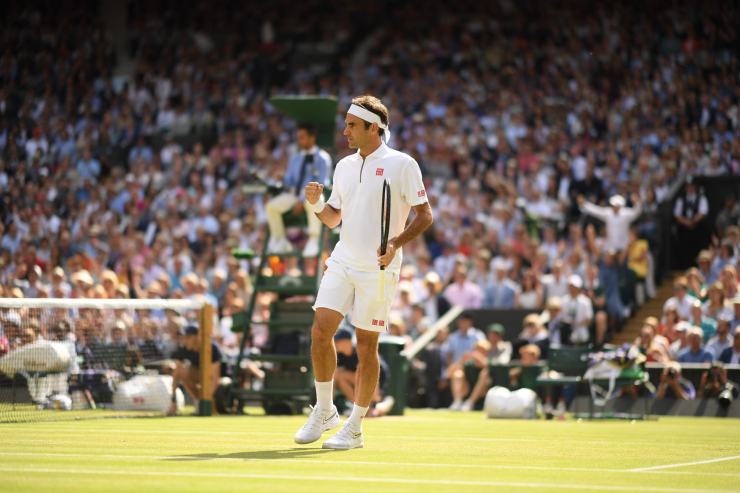
Sixteen years after winning his first major title on the grass of Wimbledon, Roger Federer just about won another. The world No. 3 had two match points but ended up outmatched by world No. 1 Novak Djokovic, who eventually prevailed in the four-hour, 55-minute five setter. It was an instant classic between two big rivals, and although Federer fell short, he played a near flawless game throughout the match and the entire tournament. Here is what we can take away from Federer’s incredible run to the finals:
You never really lose when you do it with class
Imagine coming within one point of the biggest title in tennis. It’s on your fingertips; you can almost feel the famous Wimbledon trophy in your hands, but it slips away from you, and you eventually can’t feel it anymore. He’s already won Wimbledon eight times, but coming so close to securing a ninth is heart-wrenching, right? Federer must have had his soul crushed, but he indicated nothing but class and modesty in his post-match interviews. He said his motivation is “trying to win Wimbledon, trying to have good runs here, playing in front of such an amazing crowd in this Centre Court against players like Novak and so forth. That’s what I play for.” Well, Federer, there’s no doubt you gave it your all and gave the crowd their money’s worth.
Injuries can’t stop you from returning to top form
Tennis players are no stranger to debilitating injuries, and Federer knows that more than any other. He suffered serious back injuries in 2013 and 2016 that forced his ranking to drop and major record streaks to break. In early February 2016, Federer endured a knee injury and had surgery for it but eventually announced that July that he would miss the rest of the 2016 season to recover. It was the first year since 2000 Federer didn’t win a title, and his confidence had to have dropped. However, his comeback was emphatic. He returned as world No. 16 and secured two major titles along with five other titles in the 2017 season. In 2018, he won his sixth Australian Open and became world No. 1 for the first time in 14 years. He earned his 100th title in February 2019 and played in his 31st major final Sunday. His confidence diminished three years ago, but now, it’s as high as it’s ever been.
Revenge is sweet
Not only was suffering the finals loss a lot to handle — just getting to the final was an intense task. He faced Rafael Nadal, his greatest nemesis, in the semifinal, 11 years after the two battled against each other in what is considered “the greatest match ever played” aka the 2008 Wimbledon final. Nadal won in 2008 in a grueling, seven-hour five setter to obtain his first Wimbledon title over Federer, who had won Wimbledon five consecutive years prior. In this year’s semifinal, the two met again at Wimbledon for the first time since that historic match. This time, Federer reigned supreme. Federer came back from being down in the first set tiebreaker, lost a shaky second set and never looked back as he cruised to a four set victory. The emotions were evident as Federer finally converted on his fifth match point opportunity. Of course, though, the ever-so-classy Federer expressed nothing but humility in his post-match interview, giving Nadal credit for always testing him and keeping him on his toes. This victory also earned Federer his 100th win at Wimbledon, and the way he did it, along with the brilliance he demonstrated in the final, makes it blatant he will keep tallying up the wins.
Wimbledon: Here’s what Serena Williams’ run to the finals means for the rest of us
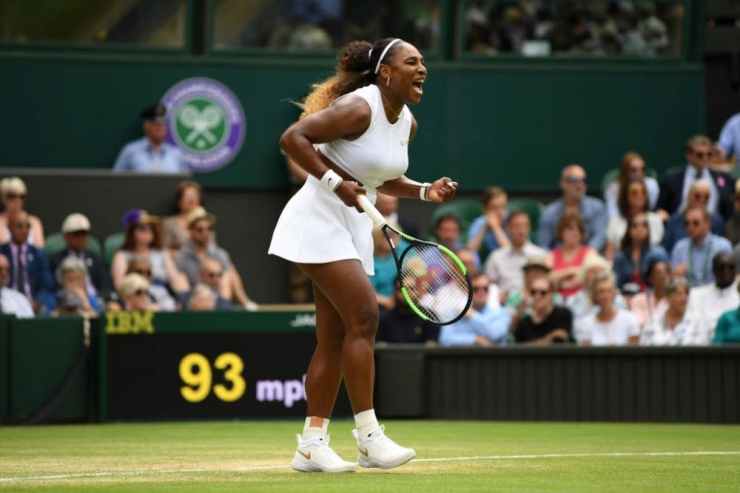
Serena Williams. Many words come to mind with the mention of her name: Icon, athlete, feminist … but, perhaps, the most significant one is resilience. Williams made it to her third Grand Slam final since her return from maternity leave, even after only playing very few matches in 2019. However, Williams lost 6-2, 6-2 to an emphatic Simona Halep, who, in Serena’s words, “played out of her mind.” In the tournament, Williams looked in top form and showed the world the best of her is here to stay for a while. Here’s what the rest of the world should take away from her run to the finals:
Age truly is just a number
Commentators take every chance they get to point out the top players’ age — specifically, Venus, who just turned 39, and Roger Federer, the world No. 3 who is returning to top form himself and will turn 38 in August. Serena’s 38th comes just a month after Federer’s.
The commentators’ constant mention of the players’ age is not only irritating — the meaning behind it isn’t always made clear. They’re all still playing extremely well, so why mention it?
Nonetheless, Serena defied all of the age comments. Her serve, considered the best ever for a female tennis player, her groundstrokes and her net play all have never looked more sharp. Just like a fine wine, Serena keeps getting better with age.
Perseverance is key
Serena wrote an article for CNN about the immense difficulties that came with the birth of her child, Olympia, on September 1, 2017, including having a hematoma and spending the first six weeks of Olympia’s life in bed. In March 2018, Serena returned to tennis with a ranking of 491—490 spots down from where she left it. She endured early-round losses at her first two WTA Premier events upon her return, but she was looking sharp at the French Open before having to withdraw from her third round matchup with rival Maria Sharapova due to a pectoral injury.
Then, the inevitable happened. It was 2018 Wimbledon, and, ranked 181 in the world, she made a run to the finals, where she lost to Angelique Kerber, 6-3, 6-3. At the last major of the year, the U.S. Open, she made another run to the finals. In a match everyone remembers, Serena fell at the hands of Naomi Osaka, in 6-2, 6-4 loss.
She started her 2019 season with a loss in the quarterfinals of the Australian Open, injuries and a loss in the third round of the French Open. Wimbledon, as of late, seems to give Serena the fewest problems, and she solidified that notion during this fortnight through her perseverance and ability to overcome adversity countless times.
Ignore the hate
At the 2018 U.S. Open, Serena did what she thought was right: She spoke up when she thought the chair umpire, Carlos Ramos, did her wrong by penalizing her for breaking her racket and “verbally abusing” him (she called him a “thief” among other things for taking away a point and eventually a game). In Serena’s defense, male players do this quite often without repercussions. Osaka was overcome with emotion in the trophy ceremony — but not in a good way. The crowd was booing during the altercations and even during the trophy presentation, and Osaka apologized for the way the match ended. Serena stepped in to tell the crowds to stop booing and congratulate Osaka for her fantastic win.
During Wimbledon this year, Serena revealed in an essay she went to therapy and even sent Osaka an apology letter following the events of that controversial final. Even as one of the biggest stars in the world, she got help when she felt she needed it. She moved on, and everyone else should as well. However, every move Serena makes will inevitably be met with controversy because that’s what being one of the greatest athletes ever means — and she’ll continue to ignore and move past it.
Let nothing stop your pursuit of your dreams
You’ve seen the Nike commercials: The Williams sisters came from humble beginnings and gradually became the best tennis players of their generation. Serena has outmatched her sister 24-7 in major titles, but they both rose from numerous hardships, including experiences of racism, on their way to stardom. Both made their names known, both pushed each other, both have let nothing stand in their way. Serena’s 2019 Wimbledon finals loss will sting, but we all know — Serena especially — that more finals appearances are to come for her.
 Bre Callahan